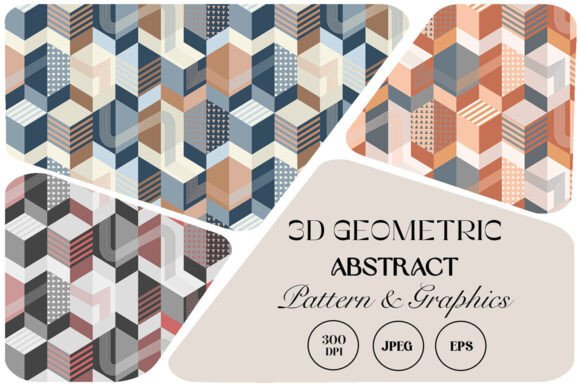
3D Geometric Abstract Pattern: A Modern Design Essential for Print and Beyond
Designers across industries are increasingly turning to 3D geometric abstract patterns to elevate the visual appeal of their projects. These dynamic compositions offer a unique blend of structure, depth, and creativity that can transform everything from home décor to fashion apparel and packaging designs. Whether you're crafting seamless backgrounds or selecting individual motifs for custom prints, 3D geometric abstract patterns provide a versatile toolkit that meets both aesthetic and functional needs.
What Makes 3D Geometric Abstract Patterns Stand Out?
At their core, 3D geometric abstract patterns are composed of clean lines, sharp angles, and layered forms that give the illusion of depth and dimension. Unlike traditional flat designs, these patterns introduce an extra layer of complexity through perspective, shadows, and spatial arrangements. This gives them a modern, eye-catching quality that works well in contemporary design trends.
- Visual Interest: The play of light and shadow within the pattern creates a sense of movement and realism.
- Abstract Freedom: While based on geometry, these patterns allow for creative expression without being tied to realistic imagery.
- Customization Potential: Their modular nature means they can be adapted to suit a variety of layouts and color schemes.
This makes them particularly useful for creating seamless patterns that repeat effortlessly while maintaining visual cohesion—ideal for large-scale applications like fabric printing, wall murals, or wallpaper designs.
Why Choose Exquisitely Selected Motif Elements?
While some design resources offer generic shapes and templates, 3D geometric abstract patterns with exquisitely selected motif elements take things to another level. These carefully curated components ensure that every shape contributes meaningfully to the overall composition, avoiding clutter and enhancing clarity.
For example, a designer working on a high-end fashion line might use a set of triangular and hexagonal motifs arranged in a 3D grid to create a futuristic print. Each element is not just random but has been chosen to reflect balance, symmetry, and visual harmony—key aspects of successful design work.
- Motif Consistency: Ensures the pattern remains cohesive when scaled up or down.
- Detail Orientation: Allows for intricate layering and variation without overwhelming the viewer.
- Print Readiness: Every element is optimized for reproduction, ensuring crisp results even at large sizes.
Applications Across Industries
The beauty of 3D geometric abstract patterns lies in their adaptability. They’re not limited to a single sector or medium. Here’s how they’re being used today:
Home Interiors
In interior design, these patterns add a touch of sophistication and modernity. From textiles like curtains and cushions to decorative wall art and flooring, 3D geometric patterns can define a space with minimal effort. Their abstract nature allows them to fit into various styles—from minimalist to eclectic—without clashing.
A popular application is in digital wallpaper creation. Using large seamless patterns, designers can cover entire walls with a repeating design that feels expansive and immersive. High-resolution files ensure that the details remain visible and sharp, even when printed at scale.
Fashion Apparel Prints
The fashion industry thrives on innovation, and 3D geometric abstract patterns are perfect for creating standout designs. These patterns can be applied to t-shirts, dresses, activewear, and accessories to deliver a bold yet balanced look.
Because the motifs are individually selectable, it's easy to mix and match different elements for custom prints. This flexibility is especially valuable for small-batch production or bespoke fashion lines where uniqueness is key. The tonal saturation of the patterns ensures vibrant colors that pop against any fabric background.
Paper and Packaging
When it comes to branding and product visibility, 3D geometric abstract patterns bring a fresh and professional edge. Whether it's for greeting cards, stationery, or luxury packaging, these patterns help create a memorable impression.
For packaging, the clean and structured nature of geometric designs communicates quality and attention to detail. And with high-resolution EPS files, logos and brand elements can be seamlessly integrated into the pattern for a unified look.
Practical Benefits of Using 3D Geometric Abstract Patterns
Designers often seek assets that are not only visually appealing but also practical. Here’s why 3D geometric abstract patterns are becoming a go-to choice:
- High-Resolution Quality: Files are typically provided in EPS format, which is vector-based and scalable without loss of quality. This is crucial for print work where detail matters.
- Seamless Repetition: Large seamless patterns eliminate visible seams, making them ideal for wrapping around products or covering surfaces entirely.
- Time Efficiency: Pre-designed motifs reduce the need for starting from scratch, allowing faster turnaround times for projects.
- Consistent Output: Clean lines and saturated tones ensure that the final print looks professional and polished across all media types.
Additionally, because these patterns are abstract, they avoid copyright issues associated with using real-world images. This makes them safe and legal for commercial use in most cases.
How to Integrate These Patterns into Your Workflow
Working with 3D geometric abstract patterns is straightforward, especially when they’re delivered as editable EPS files. Here are some tips to get the most out of your design assets:
- Use Vector Software: Open the EPS files in Adobe Illustrator or similar tools to adjust colors, scale elements, or modify the layout.
- Test Color Schemes: Experiment with different palettes to see how the pattern reacts. Some motifs may stand out more in monochrome, while others benefit from a gradient approach.
- Create Variations: Extract individual motifs and rearrange them to form new patterns tailored to specific project needs.
- Optimize for Print: Ensure the resolution is set to 300dpi before exporting JPEG previews for client presentations or mockups.
With three EPS files and three JPEG previews included, you have ample opportunity to explore and refine your designs before committing to full production. This is especially helpful when presenting ideas to clients who may not be familiar with technical file formats.
Real-World Examples and Use Cases
To better understand the value of 3D geometric abstract patterns, let’s look at some real-world scenarios:
Scenario 1: Creating a Fashion Collection
A boutique fashion brand wants to launch a new summer collection featuring bold, contemporary prints. By using a 3D geometric abstract pattern with motif elements, the designer overlays a repeating triangle pattern on a base fabric, then selects a few starburst motifs to highlight key areas like collars and hems. The result is a cohesive yet exciting lineup that stands out on the runway.
Scenario 2: Interior Branding for a Startup Office
An office interior designer needs to make a space feel innovative and welcoming. She uses a large seamless 3D geometric abstract pattern as the backdrop for feature walls and combines it with accent pieces using the same motif elements. The consistent style reinforces the company's brand identity while offering a modern, tech-forward atmosphere.
Scenario 3: Luxury Product Packaging
A cosmetics company wants to rebrand its packaging line to appear more premium. The designer applies a subtle 3D geometric pattern in metallic tones to the box design, giving it a sophisticated sheen. The pattern repeats perfectly along the surface, and the high-resolution files ensure no pixelation occurs during printing.
Considerations Before Choosing a 3D Geometric Abstract Pattern
Before integrating 3D geometric abstract patterns into your next project, consider the following factors:
- Target Audience: Will the pattern resonate with your intended demographic? Bold 3D effects may appeal to younger audiences or niche markets.
- Medium Compatibility: Ensure the pattern works well with the material it will be printed on—some fabrics or papers may absorb ink differently, affecting contrast.
- Color Contrast: Test how the pattern interacts with different backgrounds. A busy motif might need a neutral base to maintain readability.
- Scalability: Check if the pattern holds its integrity when scaled up or down. Seamless patterns should tile smoothly regardless of size.
Also, think about the emotional impact of the pattern. Do the shapes convey stability, energy, or elegance? Selecting the right motif can subtly influence the perception of your product or space.
Stay Updated with Fresh Designs
If you're interested in expanding your design library, keep an eye out for new additions to 3D geometric abstract patterns. As a designer, staying current with evolving styles is essential, and having access to weekly updates means you can always incorporate the latest trends into your work.
By following shops that specialize in seamless patterns, prints, and illustrations, you’ll find inspiration and tools to enhance your creative output. Regular check-ins can lead to discovering new ways to apply these patterns in unexpected contexts, such as promotional materials, app interfaces, or even 3D modeling textures.
Remember to leverage the flexibility of these patterns. Whether you're designing for a global audience or a local market, the ability to customize and adapt is what sets great designs apart from good ones.
Final Thoughts on Implementation
Using 3D geometric abstract patterns doesn’t require advanced design skills. With clear instructions and ready-to-use files, even beginners can achieve professional results. However, understanding the principles behind geometric abstraction and 3D rendering can significantly improve the outcome.
Take time to experiment with spacing, alignment, and color variations. A slight adjustment in hue or contrast can change the mood of the entire design. And always preview the pattern at actual print size to catch any potential issues before production.
Whether you're looking for a dramatic statement piece or a subtle background texture, 3D geometric abstract patterns offer a powerful solution. Their clean aesthetics, combined with the added dimensionality of 3D elements, make them a must-have in any designer's resource kit.
Thank you for visiting and exploring the world of 3D geometric abstract patterns. New collections are added each week, so be sure to follow and return often for fresh inspiration and top-quality design assets.